How to Cook More at Home (Without Relying on Willpower)
 By Eggcelllent
It's 7:15 p.m. You walk in the door, open the fridge, and see wilting spinach, leftover rice, and not much else. You're not starving, just tired, and ordering takeout is one tap away.
This is how most people end up eating out more than they want to. The fix isn't more discipline—it's better systems.
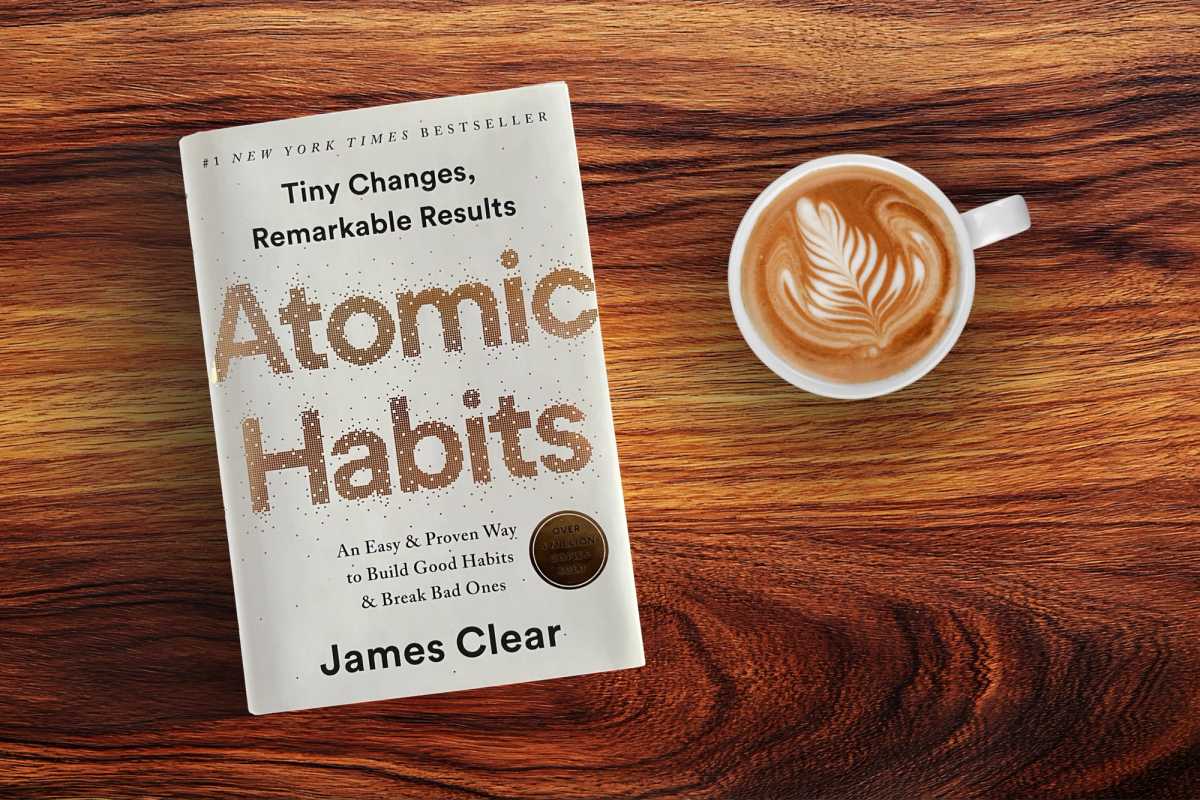
This guide applies the four laws from James Clear's Atomic Habits—make it obvious, make it easy, make it attractive, make it satisfying—to home cooking. The result: a sustainable habit that works even when motivation doesn't.
1. Build a "home cook" identity
Instead of vague goals like "I should eat out less," anchor your behavior in identity:
"I'm someone who cooks most of my meals at home."
"On weeknights, I cook at home by default and only order out on purpose."
Identity-based habits are easier to keep because every home-cooked meal reinforces who you believe you are, rather than feeling like a chore or a temporary challenge.
Repeat it to yourself: "I cook at home during the week." Aim for most days, not perfection.
2. Make home cooking the easiest option
Your environment drives more of your behavior than willpower ever will. If delivery apps live on your home screen and your pans are buried in a cabinet, takeout will win by default.
Make cooking at home the obvious choice with a few small tweaks:
- Keep a short list of easy go-to meals on your fridge or in your notes app.
- Store pans, cutting boards, knives, and oil where they're visible and easy to grab.
- Move delivery apps off your home screen or delete them entirely.
- Keep a bowl of fresh produce or frequently used vegetables where you can see them.
When your kitchen is set up for action, you'll naturally cook more at home without feeling like you're "trying harder."
3. Remove recipe friction with Eggcellent.io
Most people don't hate cooking—they hate everything that comes before it. Endlessly scrolling through recipe videos and blog posts, skipping ads, and sitting through long intros is exhausting when you're already tired.
This is where Eggcellent.io comes in.
Eggcellent.io converts recipe videos from YouTube, TikTok, and Instagram into clean, scannable text recipes. No ads. No long intros. No rewinding. Just ingredients and steps.
Use it to:
- Save only the recipes you actually liked and would cook again.
- Organize them by tags like "weeknight," "15 minutes," or "low energy."
- Open a saved recipe and start cooking in under a minute when you're hungry.
It removes the biggest decision barrier between "I should cook" and actually getting started.
4. Use the 2‑minute rule to start
You don't need enough energy to cook an entire meal. You only need enough energy to begin.
Shrink the first step down to something so small it's hard to say no:
- "I'll just take out the cutting board."
- "I'll just chop one onion."
- "I'll just boil water."
Once you start, momentum usually carries you through. The hardest part is those first two minutes, so make them as easy as possible.
Have 2–3 ultra-simple "break glass in case of emergency" meals ready in your mind:
- Eggs and rice with a little sauce or spice.
- Pasta with jarred sauce and frozen vegetables.
- A rotisserie chicken with a bagged salad.
On nights when you're tempted to order in, these are your safety net.
5. Stock staples so cooking is always possible
You cannot build a reliable home-cooking habit if your kitchen is always empty. The friction doesn't start at the stove—it starts at the grocery store.
Create a simple staples list and keep it running:
- Proteins: eggs, chicken thighs, ground beef or turkey, tofu.
- Grains: rice, pasta, tortillas, bread.
- Vegetables that last: onions, carrots, cabbage, potatoes, frozen mixed vegetables.
- Flavor builders: olive oil, butter, garlic, onions, soy sauce, salt, pepper, spices you actually like.
When your pantry and fridge have a baseline of ingredients, "I have nothing to eat" stops being true, and the excuse disappears.
Pro tip: When you save a recipe in Eggcellent.io, glance at the ingredients and add any missing staples to your grocery list. That 30-second step pays off later when you're tired and hungry.
6. Replace cravings instead of fighting them
Ordering food is often triggered by something specific:
- You're exhausted.
- You want comfort food.
- You have no backup plan.
Trying to resist those triggers with raw willpower usually fails. Instead, keep the craving but swap the response.
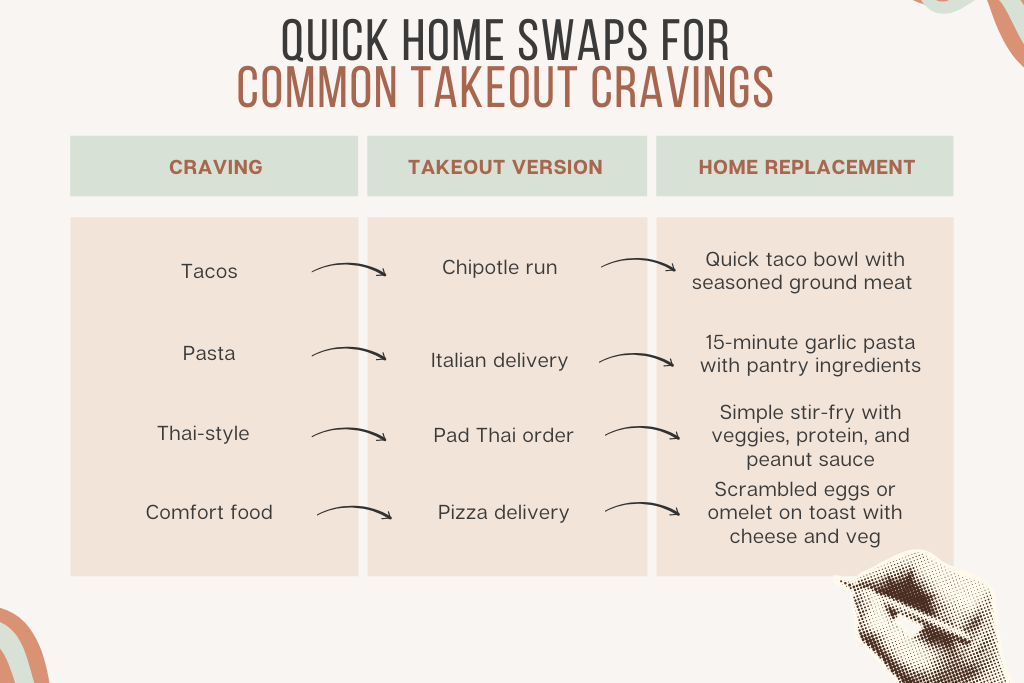
Save your favorite takeout replacements somewhere accessible—Eggcellent.io, a note on your phone, or a card on the fridge—so you don't have to think when the craving hits.
7. Make home cooking satisfying right away
"Eating healthy" and "saving money" are great reasons to cook at home, but they're too abstract to motivate you at 7 p.m. on a Tuesday. You need rewards you can feel today.
Try:
- Track money saved. Compare the rough cost of a home-cooked meal to your usual delivery order.
- Mark a calendar. Put an X on days you cooked at home to build a streak you won't want to break.
- Take photos of your meals. Even simple dishes count. Visible progress reinforces your identity as someone who cooks.
The long-term benefits keep you going. The short-term rewards get you started.
8. When you slip, don't spiral
You're going to eat out sometimes. That's normal. The goal is not to be perfect—it's to be consistent.
Use this simple rule:
Never miss twice.
If you ordered pizza tonight, cook the very next meal, even if it's just scrambled eggs on toast. Missing once is an exception. Missing twice is the start of a new pattern.
Consistency beats intensity. One night of delivery doesn't define your habits, but two or three in a row might.
9. Build a system, not a perfect streak
The goal is not "never order takeout again." The goal is:
Home cooking is my default.
A realistic system might look like:
- Cook at home on weekdays.
- Stay flexible on weekends.
- Treat eating out as a conscious choice, not a reflex.
Once the system is in place—your identity, your environment, your pantry, your low-friction tools—motivation becomes optional. The structure does the heavy lifting for you.
The bottom line
Cooking at home doesn't require more discipline. It requires less friction.
- Identity sets the direction.
- Environment sets the default.
- Simplicity sustains momentum.
- Tools like Eggcellent.io make it easy to act at the decision point—when you're one scroll away from giving up.
Your move: Pick one recipe you've been meaning to try. Save it somewhere you'll actually find it. Cook it this week.
That's it. That's the start.
Ready to extract your first recipe?
Try Eggcellent today and turn YouTube cooking videos into formatted recipes in seconds.
Get Started FreeRelated Articles
How to Use Eggcellent's Meal Planner to Organize Your Weekly Cooking
Meal Planning 101: A Beginner's Guide to Stress-Free Weekly Cooking
Recipe Converter: How to Scale Any Recipe Up or Down